Cosmetic GMP Guide: Key Principles of the ISO 22716 Standard
Good Manufacturing Practices (Cosmetic GMP) constitute the cornerstone of industrial and artisanal quality assurance for cosmetics. Mandatory across Europe under Article 8 of Regulation (EC) No 1223/2009, they establish clear guidelines regarding facilities, processing equipment, personnel hygiene, raw material handling, and quality documentation. Here are the essential insights to understand and implement GMP under the international benchmark standard ISO 22716.
💡 Need to align your manufacturing facility with GMP standards? Estimate the cost of workshop compliance validation in 2 minutes with our configurator.
What is the ISO 22716 Standard for Cosmetic GMP?
The ISO 22716:2007 standard is the globally harmonized reference document that defines the guidelines for Good Manufacturing Practices in the production of cosmetic products. It was harmonized by the European Commission to fulfill the statutory requirements of Article 8 of Regulation (EC) No 1223/2009.
This standard is not an impractical set of rigid architectural rules, but rather a pragmatic quality management methodology. It is built around risk management principles to prevent microbiological, physical, and chemical cross-contamination during manufacturing, packaging, testing, and storage.
Applying GMP guarantees that each batch of finished cosmetics produced on your premises matches its reference formula, remains free from microbial or chemical impurities, and is stored under controlled conditions. This compliance declaration is a compulsory document included in your cosmetic PIF.
🔬 Insights from our Cosmetic Safety Assessor
"Health authority inspectors pay special attention to the personnel and documentation sections of ISO 22716. Personnel must receive documented training on hygiene protocols (gloves, hairnets, masks during filling, regular hand sanitization), and this training must be supported by signed records. Regarding documentation, the absence of batch-level traceability for raw materials is the single most common major non-conformity flagged during inspections. Our consulting support provides compliant document templates to safeguard your operations."
The Core Documentation Pillars of Cosmetic GMP
To demonstrate that your workshop or manufacturing plant complies with ISO 22716, you must establish a structured quality documentation system, including:
- Standard Operating Procedures (SOPs): Written instructions specifying "who does what, when, and how" for every critical task (cleaning and sanitation, raw material intake, balance calibration, batch release).
- Weighing and Batch Manufacturing Records: For every production run, operators must record the exact measured weight of each raw material, supplier lot numbers, heating temperatures, mixing speeds, and agitation duration.
- Cleaning and Sanitization Logs: Signed records verifying that production equipment (tanks, mixers, filling nozzles, spatulas) and premises were sanitized before and after each manufacturing cycle.
- Out-of-Specification (OOS) and Deviation Logs: Formal records documenting any departure from standard procedures or specifications (e.g., thermal overshoot, abnormal batch pH) alongside corrective and preventive actions (CAPA).
Our team delivers customized PIF services that incorporate personalized GMP documentation packages tailored to your specific manufacturing workflow.
⚠️ 3 Most Common GMP Non-Conformities
- Invalid Equipment Sanitization Protocols: Routine washing is insufficient. You must use validated disinfectants (typically 70% isopropyl alcohol) and log each disinfection operation post-cleaning.
- Inadequate Formulation Water Quality: Raw tap water does not meet GMP standards due to fluctuating bacterial loads and mineral content. You must utilize purified, demineralized water monitored for microbial bioburden.
- Absence of a Physical Quarantine Area: Received raw materials must be stored in a clearly demarcated quarantine zone until verified and officially released by quality control for production.
Step-by-Step Implementation of GMP in Your Workshop
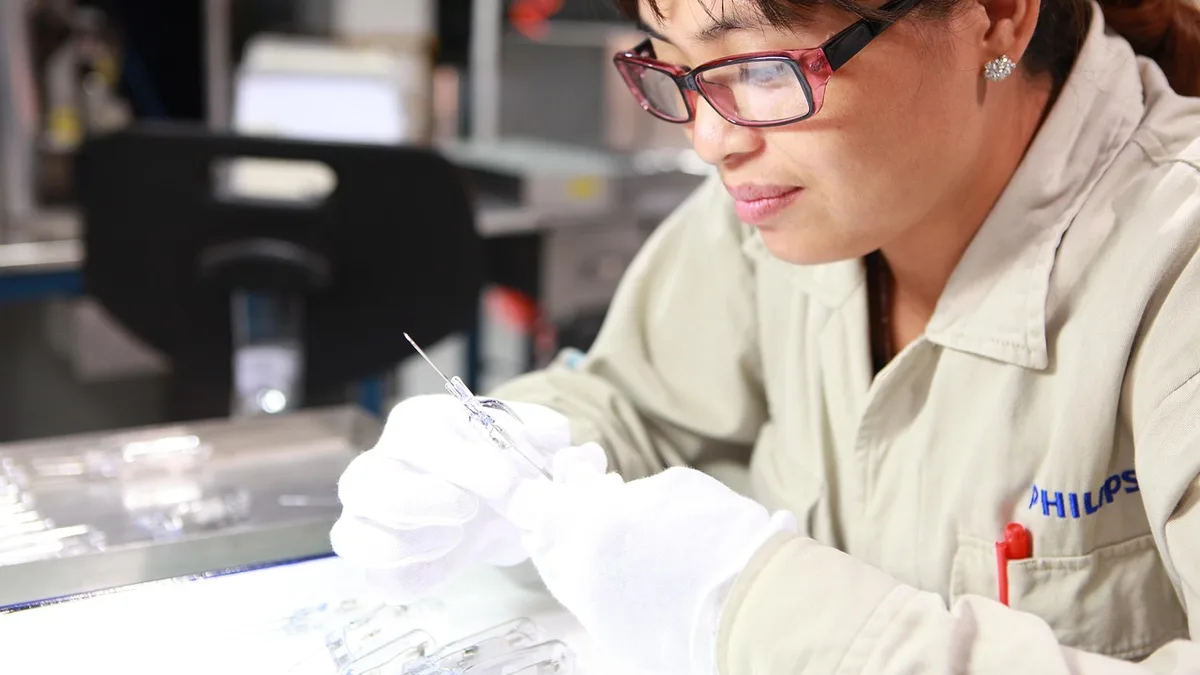
Implementing ISO 22716 is a structured, progressive process. For artisanal workshops and growing brands, implementation follows these phases: initial gap analysis (internal preliminary assessment to identify deficiencies), premises layout optimization (smooth cleanable surfaces, unidirectional material/personnel flow), drafting core SOPs, staff hygiene training, and conducting mandatory annual internal audits.
For additional details on comprehensive regulatory compliance, explore our related articles: cosmetic PIF FAQ for formulation and safety requirements, our practical guide on reselling cosmetics obligations, and our strategic playbook on selling cosmetics in the EU.
Frequently Asked Questions on Cosmetic GMP (ISO 22716)
- Is third-party ISO 22716 certification mandatory to sell cosmetics?
- Compliance with ISO 22716 principles is legally mandatory under EU law, but formal third-party certification (by registrars such as AFNOR, SGS, or Bureau Veritas) is voluntary. A self-declaration of compliance supported by an internal audit and complete documentation satisfies EU Article 8 requirements for placing cosmetics on the market.
- Does GMP apply to cosmetics imported from outside the EU?
- Yes. Regulation (EC) No 1223/2009 requires the European importer to verify that imported goods were produced under standards equivalent to European GMP. The importer must include a formal GMP compliance certificate from the foreign manufacturer in the PIF, ideally supported by third-party audit reports.
- What is a GMP deviation and how should it be handled?
- A deviation is any unexpected event occurring during manufacturing (such as a scale malfunction, power interruption during emulsification, or minor ingredient mix-up). You must document the incident in a deviation log, assess its impact on product safety with your Safety Assessor, and formally authorize batch release or destruction.
Configure Your Cosmetic PIF Project Live
Calculate your EU Cosmetic PIF & CPSR Price
Select your profile, galenic formula type, and laboratory test status to get an instant, transparent regulatory estimate.