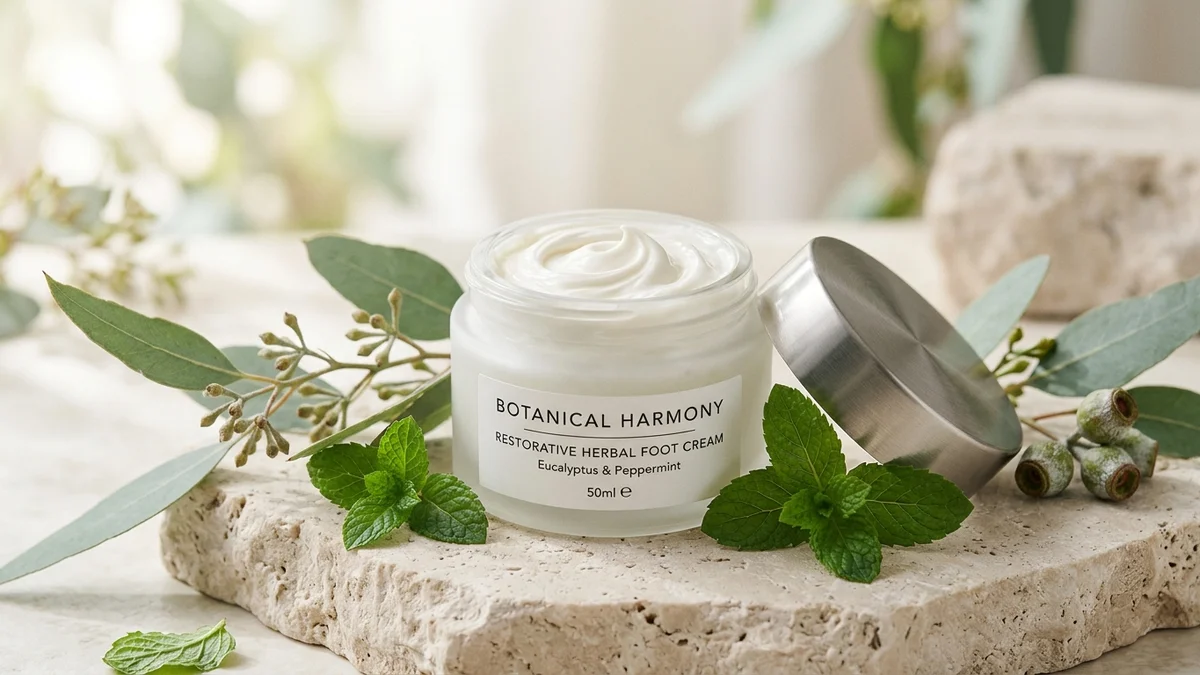
Foot Cream Regulation: Restorative Formulation, Keratolytic Actives, and PIF Requirements
Our feet bear the entirety of our body weight daily, enduring repeated friction and confinement in occlusive footwear. Lacking sebaceous glands, the plantar stratum corneum is exceptionally susceptible to severe dehydration, leading to thickened hyperkeratosis, calluses, and painful heel fissures. Formulating an effective restorative foot cream necessitates pairing deep emollients with potent keratolytic agents to soften and exfoliate hardened skin. In Europe, commercializing these targeted formulations requires building a compliant Product Information File (PIF) under Regulation (EC) No 1223/2009. Here is our complete regulatory compliance guide.
💡 Formulating a cracked heel balm, anti-callus cream, or restorative foot balm? Ensure the regulatory compliance of your active concentrations. Estimate your costs in 2 minutes with our configurator.
The Chemistry of Foot Creams: Hydration, Emollience, and Keratolytic Action
An effective foot cream must penetrate the dense, thickened stratum corneum of the soles while softening compacted keratin matrices. It typically balances three key ingredient categories:
- Keratolytic actives (callus softening): Urea (INCI: Urea) is the gold standard active, incorporated at 10% to 30% in intensive treatments. At elevated concentrations, it disrupts hydrogen bonding within keratin proteins, promoting natural desquamation. Salicylic acid (BHA) and glycolic acid (AHA) are also widely used for targeted chemical exfoliation.
- Lipid-replenishing emollients: Shea butter (INCI: Butyrospermum Parkii Butter), avocado oil, or lanolin derivatives to deeply nourish plantar tissues and restore biomechanical elasticity across heel contours.
- Purifying and refreshing botanicals: Essential oils of tea tree (Melaleuca Alternifolia), peppermint, or lavender to curb microbial proliferation (responsible for bromhidrosis/foot odor) while delivering an invigorating cooling sensation.
The foot cream PIF integrates all formulation records, raw material documentation, and safety data. To explore foundational standards for body care cosmetics, consult our guide on the body care and hygiene PIF and our pillar resource on the cosmetic PIF.
🔬 Cosmetic Safety Assessor Insights
"Due to elevated concentrations of keratolytic agents such as 10% to 30% urea or salicylic acid, product pH and dermal tolerance require meticulous evaluation. Salicylic acid is legally restricted to a maximum of 2.0% in leave-on cosmetic products under Annex III of the EU Cosmetics Regulation. In Part B of the CPSR, our qualified Safety Assessor verifies that the Margin of Safety (MoS) comfortably exceeds 100 based on standard plantar dermal exposure (approximately 1,400 cm² for an adult). Furthermore, human patch tests under dermatological control on dry or cracked skin panels are strongly advised to rule out cutaneous irritation."
Step-by-Step Regulatory Compliance for Foot Creams
To market your foot care cream legally in France, the European Union, or Switzerland, follow these essential compliance steps:
- Stability and container compatibility testing: Accelerated aging tests at 40°C for 8 to 12 weeks to assess emulsion stability and confirm urea stability (which may release ammonia and carbon dioxide upon degradation, causing packaging bloating).
- Microbiological challenge testing: Mandatory under ISO 11930 for all aqueous emulsion formulas to substantiate antimicrobial preservation efficacy throughout product shelf life.
- CPNP notification: Mandatory registration on the European Cosmetic Product Notification Portal prior to distributing goods into commercial channels.
Our regulatory team provides comprehensive support for your projects. Review our transparent packages and details in our tailored PIF services overview.
⚠️ 3 Common Regulatory Pitfalls in Foot Cream Compliance
- Exceeding the 2% salicylic acid threshold: Formulating beyond 2% in leave-on cosmetics is illegal under Annex III, preventing CPSR approval.
- Omitting essential oil fragrance allergen declarations: Natural allergens present in tea tree or peppermint oils (such as limonene or linalool) must be listed in the INCI list whenever exceeding 0.001% in leave-on cosmetics.
- Making medical antifungal claims: Claiming that a cosmetic cream treats or cures athlete's foot (tinea pedis) or fungal nail infections reclassifies the product as an unauthorized medicinal drug. Maintain purely cosmetic hygiene claims ("prevents unpleasant foot odors", "purifies plantar skin").
Interconnected Regulatory Compliance for Your Cosmetic Range
If you also formulate complementary exfoliating, scrub, or sun care products, review our specialized regulatory guides:
- For physical foot exfoliants, review our guide on foot scrub regulation.
- For homemade exfoliating foot treatments, consult our guide on dry feet scrub formulation and PIF.
- For whole-body solar protection, explore our guide on sunscreen regulation.
Frequently Asked Questions About Foot Cream Regulations
- Why is urea chemically challenging to stabilize in aqueous emulsions?
- In aqueous solutions, urea gradually undergoes hydrolytic degradation into ammonia and carbon dioxide. This process drives formula pH upward (rendering it alkaline and potentially skin-irritating) while causing primary plastic packaging to bloat. To stabilize urea within your PIF dossier, formulators must integrate a suitable buffering system (such as lactic acid and sodium lactate) and demonstrate physicochemical stability across 12 weeks at 40°C.
- Is container-content compatibility testing required for plastic tubes?
- Yes. Foot creams are commonly filled into flexible polyethylene (PE) or laminated aluminum tubes. Accelerated compatibility testing across 8 to 12 weeks at 40°C verifies that high active concentrations or lipophilic emollients do not trigger stress cracking, delamination, or cap leakage.
- How do I substantiate an "anti-cracked heel" claim on packaging?
- Claims such as "repairs cracked heels" or "visibly reduces calluses" require objective clinical substantiation. The testing laboratory conducts in vivo open clinical trials under dermatological supervision on volunteers exhibiting dry, cracked heels, capturing clinical scoring and profilometric measurements at day 14 and day 28.
Configure Your Cosmetic PIF Project Live
Calculate your EU Cosmetic PIF & CPSR Price
Select your profile, galenic formula type, and laboratory test status to get an instant, transparent regulatory estimate.