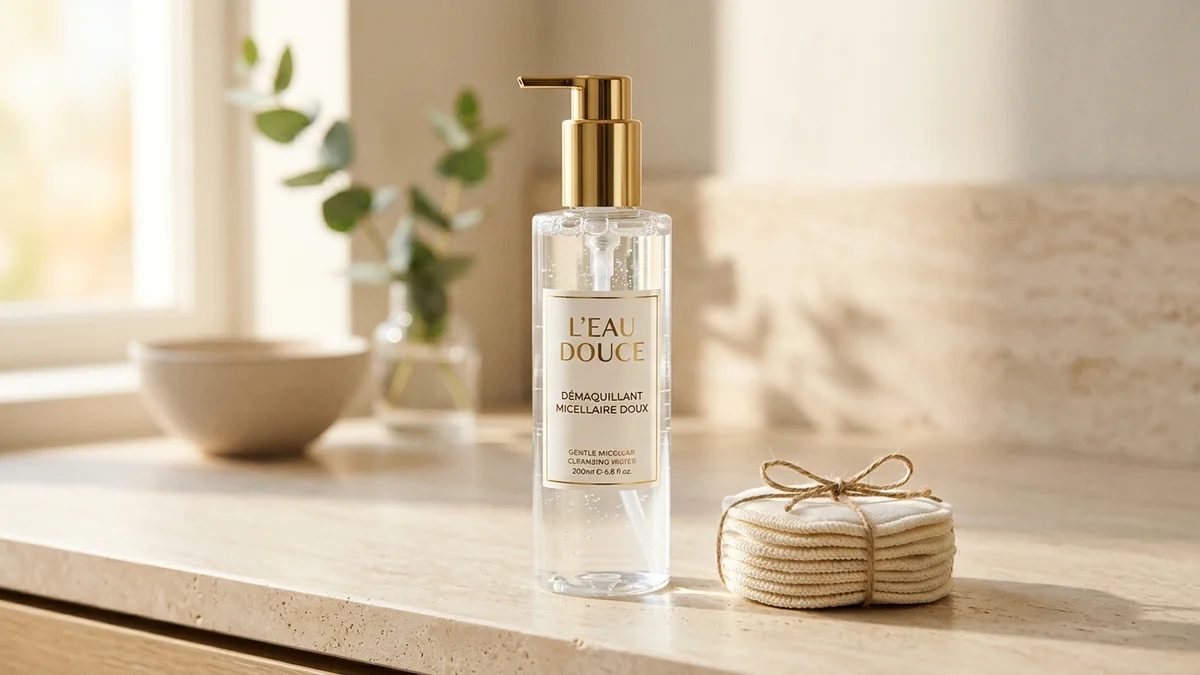
Facial and eye makeup remover: formulation guide, galenic formats, and regulatory requirements
Makeup remover represents the foundational first step in any effective facial skincare routine, essential for clearing makeup pigments, accumulated sebum, and environmental pollution particles. Whether formulated as a lipid-replenishing cleansing oil, an unctuous cleansing milk, a refreshing micellar water, or a foaming cleansing gel, this cosmetic product comes into direct contact with delicate facial skin and fragile ocular mucous membranes. To legally market this product across Europe, you must assemble a Product Information File (PIF) fully compliant with Regulation (EC) No 1223/2009. Here is our comprehensive regulatory guide.
💡 Are you launching a makeup remover or micellar water? Ensure complete regulatory compliance for your formulations. Estimate your compliance costs in 2 minutes with our configurator.
Diverse makeup remover galenic formats and specific regulatory constraints
The chosen galenic format of your makeup remover dictates the specific laboratory testing protocols and toxicological evaluations required by our safety expert:
- Cleansing oil: an anhydrous formula (water-free) blending botanical oils with a gentle emulsifier (such as Polyglyceryl-4 Oleate) to allow milky rinse-off with water. Because it is anhydrous, it is exempt from microbiological challenge testing under ISO 29621. Physicochemical stability and rancidity testing (peroxide value monitoring) remain mandatory.
- Micellar water: an aqueous solution containing mild surfactant micelles (such as PEG-6 Caprylic/Capric Glycerides or Decyl Glucoside). Being high in water content, it strictly requires a microbiological challenge test under ISO 11930. The pH must be carefully buffered to match ocular mucous membranes (between 6.8 and 7.2).
- Cleansing milk: a fluid emulsion (oil-in-water) combining water, emollients, and emulsifying agents. It requires both an ISO 11930 challenge test and accelerated stability testing in an oven at 40°C over 8 to 12 weeks to verify that the emulsion does not separate over its shelf life.
The makeup remover PIF brings together all formulation data, manufacturing batch records, and safety substantiation. To understand the foundational regulatory architecture for facial skincare, explore our guide on facial care PIF and our cornerstone guide on the cosmetic PIF.
🔬 Insights from our Cosmetic Safety Assessor
"Eye makeup removers are subject to heightened scrutiny by European health authorities (such as the ANSM in France). Applied directly in the ocular area, any formulation flaw can cause stinging, tearing, or chemical conjunctivitis. To validate the Cosmetic Product Safety Report (CPSR), the safety assessor requires conclusive in vitro ocular irritation testing (such as the HET-CAM test on hen's egg chorioallantoic membrane or the BCOP bovine corneal opacity and permeability test). Marketing claims such as 'does not sting eyes' or 'ophthalmologist tested' strictly require in-use clinical trials supervised by an independent certified ophthalmologist."
Regulatory compliance steps for your makeup remover
To legally market your makeup remover in France or across the European Union, you must complete the following mandatory milestones:
- Stability and container compatibility testing: accelerated stability testing at 40°C over 8 to 12 weeks to confirm formula integrity, absence of phase separation, and packaging inertness.
- Microbiological challenge test: mandatory under ISO 11930 for all aqueous formulations (micellar waters, cleansing milks, gels).
- Cosmetic Product Safety Report (CPSR): preparation and formal sign-off by a qualified Safety Assessor. Fragrance allergens, ocular tolerance data, and systemic margins of safety (MoS) undergo thorough evaluation.
- CPNP notification: mandatory registration on the European Cosmetic Products Notification Portal prior to product commercialization.
Our regulatory team provides turnkey support for your facial cleansing line. Discover our rates and service scopes in our dedicated PIF service packages.
⚠️ 3 frequent non-compliances in makeup removers
- Formulating at an overly acidic pH for ocular use: a pH below 5.5 (appropriate for general facial skin) triggers immediate burning and stinging if it contacts the eye during mascara or eyeliner removal. The pH should be calibrated close to neutral tear fluid pH (approx. 7.0).
- Incorporating ocular irritant essential oils: aromatic essential oils (such as peppermint, eucalyptus, or citrus oils) are strictly avoided in eye makeup removers due to the severe risk of ocular mucosal irritation and chemical conjunctivitis.
- Unsubstantiated performance claims: displaying packaging claims such as "removes waterproof makeup in one swipe" without clinical trial proof violates Commission Regulation (EU) No 655/2013 and exposes the brand to regulatory sanctions for misleading claims.
Semantic regulatory linking with complementary formulations
If you are also formulating complementary facial skincare products, consult our dedicated regulatory guides:
- For physical and chemical exfoliants, check our guide on face scrub regulation.
- For nourishing face treatments, explore our guide on face mask regulation.
- For formulating targeted clarifying treatments, read our guide on skincare claims and PIF for blemish-prone skin.
Frequently asked questions about Makeup Removers
- Do bi-phase makeup removers require specific stability testing?
- Yes. Bi-phase makeup removers contain an aqueous phase and an oil phase (often colored) that cleanly separate at rest. During accelerated stability testing, the testing laboratory verifies that both phases separate crisply without forming a cloudy, permanent micro-emulsion after shaking, and confirms that dye stability is maintained under light exposure.
- Can phenoxyethanol be used as a preservative in an organic certified micellar water?
- Phenoxyethanol is a synthetic preservative permitted in conventional cosmetics up to a maximum concentration of 1% under EU regulation. However, it is strictly prohibited under organic certification standards (Cosmos, Ecocert). If you are pursuing organic certification, you must replace it with Cosmos-approved alternatives, such as sodium benzoate and potassium sorbate.
- How is makeup remover efficacy substantiated for the PIF?
- If you make specific efficacy claims (such as "removes 99% of long-wear makeup"), you must include substantiating evidence in Part 4 of the PIF. This is achieved through clinical in-use trials under dermatological or ophthalmological supervision, or standardized skin reflectance measurements taken before and after cleansing across a panel of volunteers.
Configure Your Cosmetic PIF Project Live
Calculate your EU Cosmetic PIF & CPSR Price
Select your profile, galenic formula type, and laboratory test status to get an instant, transparent regulatory estimate.