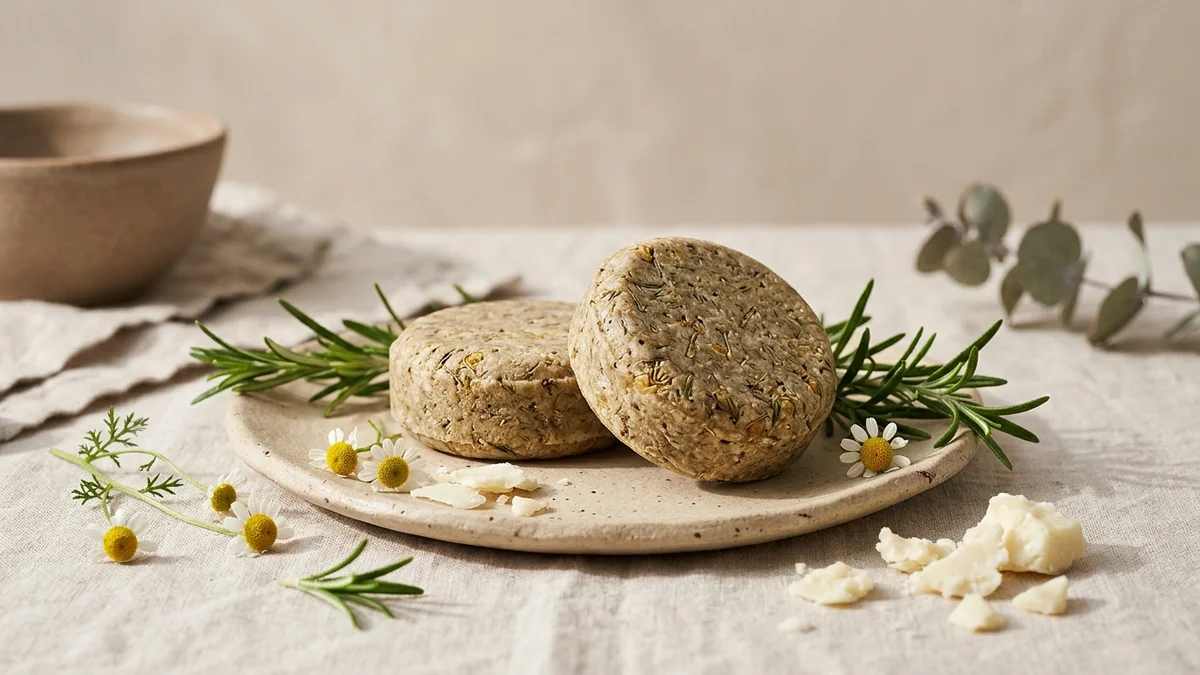
Handmade Solid Shampoo: Natural Formulation Secrets and European Regulatory Requirements
Artisanal solid shampoo has become an emblem of the ecological transition in beauty. Compact, lightweight, and completely plastic bottle-free, it appeals through its zero-waste positioning and concentrated active botanical profile. However, formulating and legally marketing a solid shampoo in Europe involves strict regulatory responsibilities. Although typically anhydrous, solid hair cleansers must fully comply with Regulation (EC) No 1223/2009. Here is our comprehensive regulatory guide to formulating, testing, and legally launching your solid shampoo line.
💡 Launching an artisanal solid shampoo or an eco-friendly solid cosmetics brand? Ensure full regulatory compliance for your formulas. Estimate your compliance budget in 2 minutes with our configurator.
Formulating Artisanal Solid Shampoo: Surfactants and Galenic Equilibrium
Unlike traditional cold-process soap bars (which have an alkaline pH between 8 and 10, disrupting the hair cuticle and causing frizz), a true solid shampoo is formulated using concentrated solid surfactants (syndet bar). This achieves an optimal physiological pH close to the natural acidity of hair and scalp (between 4.5 and 5.5 in aqueous solution).
The core building blocks of a high-performance solid shampoo bar include:
- Primary solid surfactant: Sodium Cocoyl Isethionate (SCI) is the benchmark surfactant for natural solid shampoos. Very gentle and derived from coconut fatty acids, it generates a dense, luxurious lather and rinses cleanly. It typically represents 50% to 70% of the formulation.
- Secondary mild co-surfactants: Cocamidopropyl Betaine or Decyl Glucoside in powder or liquid format to enhance dermal tolerance and boost flash foam.
- Botanical butters and oils: Cocoa seed butter (INCI: Theobroma Cacao Seed Butter), shea butter, or castor oil. They impart structural hardness to the bar and nourish the keratin fiber.
- Plant powders and mineral clays: Kaolin clay, stinging nettle powder, or shikakai powder to cleanse the scalp and absorb excess sebum.
- Citric acid: Essential to buffer the finished product pH down to the slightly acidic range required for cuticle smoothing.
Securing market approval requires assembling a complete cosmetic PIF. To understand the regulatory structure tailored to hair products, explore our guide on the hair care PIF.
🔬 Insights from our Cosmetic Safety Assessor
"Artisanal solid shampoos are anhydrous (free from unbound water) prior to use. From a microbiological standpoint, they are categorized as low-risk formulations under ISO 29621 and are exempt from mandatory challenge testing, which saves significant laboratory costs. However, physicochemical stability and packaging compatibility testing remains strictly compulsory to ensure that the bar does not soften or sweat under warm storage conditions, and that diluted solution pH remains stable over time. Furthermore, airborne SCI dust during manufacturing is a potent respiratory irritant, making occupational health and ISO 22716 GMP compliance in the workshop a high audit priority."
Regulatory Steps to Ensure Market Compliance for Your Solid Shampoo
To legally commercialize your solid shampoo in France, the European Union, and the UK, you must complete the following regulatory steps:
- Accelerated Stability and Packaging Compatibility Testing: 8 to 12 weeks of accelerated thermal chamber storage at 40°C to verify that the shampoo bar maintains hardness, retains its shape, and exhibits zero oil exudation.
- Cosmetic Product Safety Report (CPSR): Comprehensive toxicological review and formal signature of Part B by our certified safety assessor, including detailed quantification of fragrance allergens.
- CPNP Portal Notification: Compulsory electronic notification of the finished cosmetic product prior to commercial distribution.
Our team provides comprehensive turnkey regulatory assistance. Review our transparent packages and details in our dedicated PIF services guide.
⚠️ 3 Frequent Regulatory Pitfalls in Solid Shampoo Formulation
- Confusing solid syndet shampoo with saponified soap: A solid shampoo formulated with synthetic surfactants is legally not a traditional soap. It cannot benefit from soap-specific regulatory exemptions and requires a complete PIF with all supporting documentation.
- Omitting fragrance allergen declarations: When incorporating pure essential oils (such as lavender, sweet orange, or Atlas cedar), regulated allergens like linalool, limonene, and citral must appear explicitly on the packaging INCI list.
- Using non-cosmetic grade raw materials: Raw surfactants like SCI must meet strict cosmetic purity criteria, verifying that residual trace ethylene oxide or 1,4-dioxane remain strictly below permissible safety limits.
Semantic Regulatory Linking Across Your Hair Care Range
If you also manufacture complementary styling, grooming, or conditioning products, explore our specialized guides:
- For conditioning rinse formulations, read our guide on hair conditioner regulation.
- For styling waxes and beard balms, check our guide on beard wax regulation.
- For scalp detox and clarifying protocols, explore our guide on the hair clarifying guide.
Frequently Asked Questions About Solid Shampoo Regulation
- Is packaging compatibility testing required for cardboard packaging?
- Yes. Artisanal solid shampoos are frequently packaged in recyclable paperboard cartons or kraft sleeves to support a zero-waste claim. During the 8-to-12-week accelerated stability study at 40°C, the testing laboratory verifies that lipid components do not bleed through the carton (oil staining) and that external printing inks do not migrate into the cosmetic product.
- Can natural clays be incorporated into commercial solid shampoos?
- Yes. White kaolin clay or green illite clay are popular additions to cleanse excess sebum and enhance bar firmness. The safety assessor must review technical data sheets (TDS) and certificates of analysis (CoA) for each clay batch to verify that heavy metals (lead, arsenic, cadmium) remain within European safety thresholds.
- How is the pH of a solid shampoo measured for the PIF?
- Because a dry solid bar has no free moisture, pH is measured after dispersing the product in distilled water (typically as a 1% or 10% solution). The measured pH should fall between 4.5 and 5.5 to ensure compatibility with hair keratin and be approved by the safety assessor.
Configure Your Cosmetic PIF Project Live
Calculate your EU Cosmetic PIF & CPSR Price
Select your profile, galenic formula type, and laboratory test status to get an instant, transparent regulatory estimate.