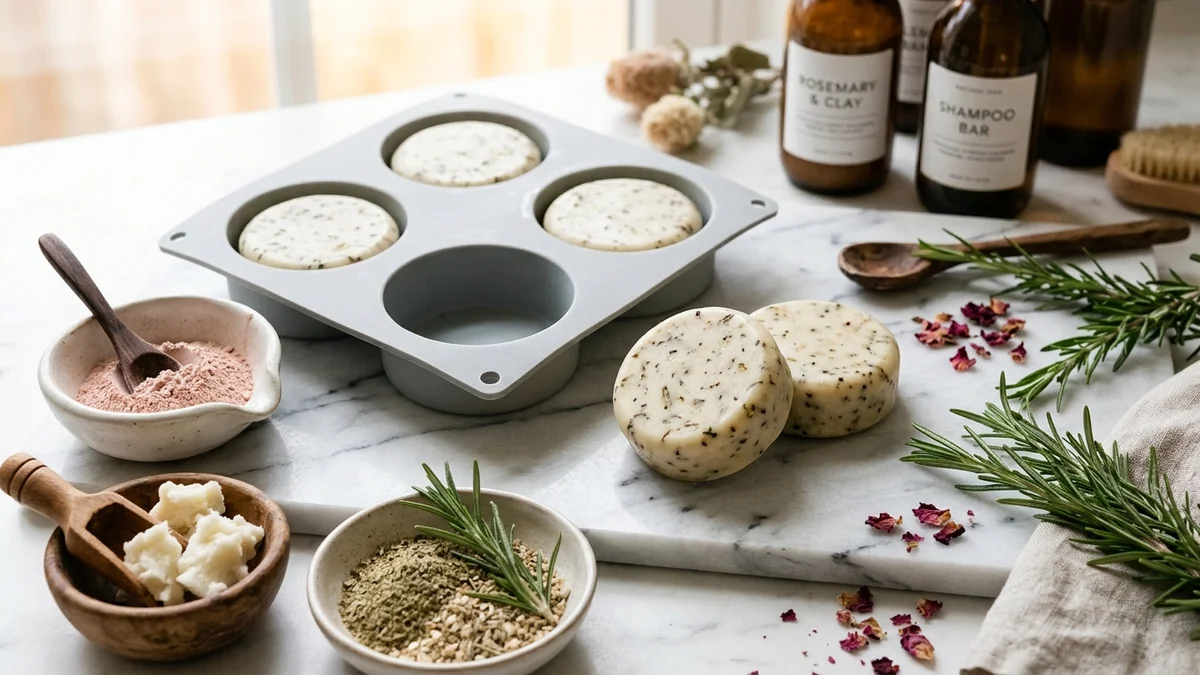
Making Your Own Solid Shampoo: Formulation Recipe and European PIF Regulation
The solid shampoo market has expanded dramatically in recent years, driven by zero-waste consumer habits, plastic packaging elimination, and clean beauty expectations. Craft soapmakers, indie cosmetic brands, and natural beauty artisans are formulating solid shampoo bars in increasing numbers. However, transitioning from a homemade recipe to a commercially distributed cosmetic product in the European Union requires rigorous compliance with Regulation (EC) No 1223/2009. From choosing gentle surfactants to assembling your Product Information File (PIF), here is our complete technical and regulatory guide.
💡 Formulating an artisanal solid shampoo bar? Validate your recipe, draft your CPSR, and bring your hair care product into full regulatory compliance. Obtain your accurate quote in 2 minutes with our configurator.
Solid Shampoo vs. Cold Process Soap: A Costly Beginner Confusion
A frequent mistake made by artisanal soapmakers and indie creators is treating solid shampoo like a traditional cold-process soap bar. From chemical, dermatological, and regulatory standpoints, these two products are entirely distinct:
- Cold-process soap: obtained via saponification of vegetable oils and fats with sodium hydroxide (lye). The resulting product is inherently alkaline, with a pH typically between 9.0 and 10.5. Applied to hair, alkaline soap lifts hair cuticles, creates dullness, leaves calcium soap scum in hard water, and irritates sensitive scalps.
- Formulated syndet solid shampoo: composed of preformed synthetic or plant-derived solid surfactants (such as Sodium Cocoyl Isethionate - SCI, or Sodium Lauryl Sulfoacetate - SLSA) combined with vegetable butters, conditioning waxes, and clays. Syndet bars allow precise pH adjustment to a hair-friendly, slightly acidic range (typically pH 4.5 to 5.5).
This distinction has profound regulatory implications: while cold-process soaps rely on historic exemptions for certain raw materials, syndet solid shampoos require rigorous toxicological safety reviews for every concentrated surfactant. To review the regulatory requirements for classic rinse-off cleansers, consult our guide on shower gel regulation.
🔬 Insights from our Cosmetic Safety Assessor
"Solid shampoos concentrate high percentages of surfactants (often 40% to 60% of the dry bar weight). When handling powdered surfactants like SCI in an artisanal workshop, airborne dust generation presents serious respiratory irritation risks for the manufacturer. Furthermore, ocular tolerance testing (in vitro HET-CAM or BCOP) and skin compatibility testing on finished formulas are vital because accidental runoff into eyes during hair washing can cause significant irritation if surfactant ratios and pH buffering are not meticulously calibrated."
PIF Regulatory Requirements for Solid Shampoos: What You Must Compile Before Selling
Selling even a single bar of solid shampoo at a local craft market, beauty salon, or online shop requires holding a complete PIF before placing it on the market. Under European Regulation (EC) No 1223/2009, your file must include:
- Complete quantitative and qualitative formulation: with exact chemical nomenclature, INCI names, CAS numbers, and supplier batch references for every raw material.
- Raw material documentation: full 16-section Safety Data Sheets (SDS), Certificates of Analysis (CoA), and Technical Data Sheets (TDS) for every ingredient (surfactants, oils, essential oils, clays).
- Preservative evaluation and microbiological safety: anhydrous solid shampoo bars with very low water activity (Aw < 0.75) may be justified as low microbiological risk under ISO 29621, potentially exempting the bar from challenge testing. However, if botanical waters or high moisture levels remain, an ISO 11930 challenge test is mandatory.
- Cosmetic Product Safety Report (CPSR): Parts A and B drafted and signed by our qualified Safety Assessor, including Margin of Safety (MoS) toxicological calculations.
- Good Manufacturing Practices (GMP / ISO 22716): documented manufacturing and hygiene procedures guaranteeing batch traceability.
- Notification on the European CPNP portal: mandatory prior to commercialization.
To learn more about the structure of your compliance file, explore our complete guide on the Product Information File (PIF) and our overview on cosmetic PIF compliance.
⚠️ 3 Technical Pitfalls in Solid Shampoo Formulation
- Dust inhalation hazards during compounding: failing to wear certified personal protective equipment (FFP3 respirators) when handling powdered SCI creates severe occupational health violations under GMP and labor regulations.
- Overly high surfactant concentrations causing scalp irritation: exceeding safe surfactant thresholds without sufficient soothing emollients (shea butter, cetearyl alcohol) results in unfavorable toxicological assessments in CPSR Part B.
- Bar melting and structural softening in humid bathrooms: solid shampoo bars formulated without sufficient high-melting-point lipids (beeswax, cetyl alcohol, stearic acid) dissolve prematurely in moist conditions, leading to consumer complaints and stability failures.

Optimizing Your Recipe: Recognized Hair Actives That Add Proven Value
Beyond the cleansing surfactant base, incorporating clinically recognized hair care actives elevates performance and reinforces marketing claims. Recommended cosmetic actives include:
- Hydrolyzed silk or wheat proteins (INCI: Hydrolyzed Silk / Hydrolyzed Wheat Protein): form a protective conditioning film over the hair cuticle, smoothing porosity and enhancing shine. Low molecular weight fractions penetrate slightly into damaged hair shafts.
- Panthenol (Pro-Vitamin B5) (INCI: Panthenol): acts as an effective humectant that penetrates hair keratin, providing long-lasting moisture, improving tensile strength, and soothing sensitive scalps.
- Bamboo extract (INCI: Bambusa Vulgaris Extract): naturally rich in bio-available silica, it strengthens the hair shaft, reduces breakage, and supports volumizing claims for fine hair.
If you also produce solid hair conditioners, our guide on natural conditioner formulation and PIF offers complete technical guidance to build a cohesive hair care range.
Frequently Asked Questions About Homemade Solid Shampoo
- Can I formulate a 100% natural, COSMOS-certifiable solid shampoo?
- Yes, provided you choose COSMOS-approved or certified surfactants. Certain grades of SCI produced via green chemistry criteria are accepted by COSMOS and Ecocert. Similarly, plant-derived glucosides and specific forms of SLSA can comply with natural certification requirements. Both COSMOS Natural and COSMOS Organic impose strict percentages of natural-origin and organic certified ingredients. We work with formulators to validate certifiable raw materials without sacrificing foaming performance.
- Does artisanal solid shampoo qualify for the cold-process soap regulatory exemption?
- No. A solid shampoo formulated with syndet surfactants (such as SCI, SCS, or SLSA) is categorized as an ordinary cosmetic product under Regulation (EC) No 1223/2009. It is subject to full PIF compilation, CPSR safety assessment, and CPNP notification. Calling the bar a "cleansing cake" or "shampoo soap" does not exempt the manufacturer from mandatory cosmetic regulatory obligations.
- Must fragrance allergens be declared on the solid shampoo label?
- Yes. Under Commission Regulation (EU) 2023/1545 expanding the list of mandatory fragrance allergens, any fragrance or essential oil allergen present above 0.01% in a rinse-off cosmetic must be explicitly listed by its chemical INCI name. Our qualified Safety Assessor verifies allergen concentrations from raw material documentation to ensure 100% compliant packaging labeling.
Configure Your Cosmetic PIF Project Live
Calculate your EU Cosmetic PIF & CPSR Price
Select your profile, galenic formula type, and laboratory test status to get an instant, transparent regulatory estimate.