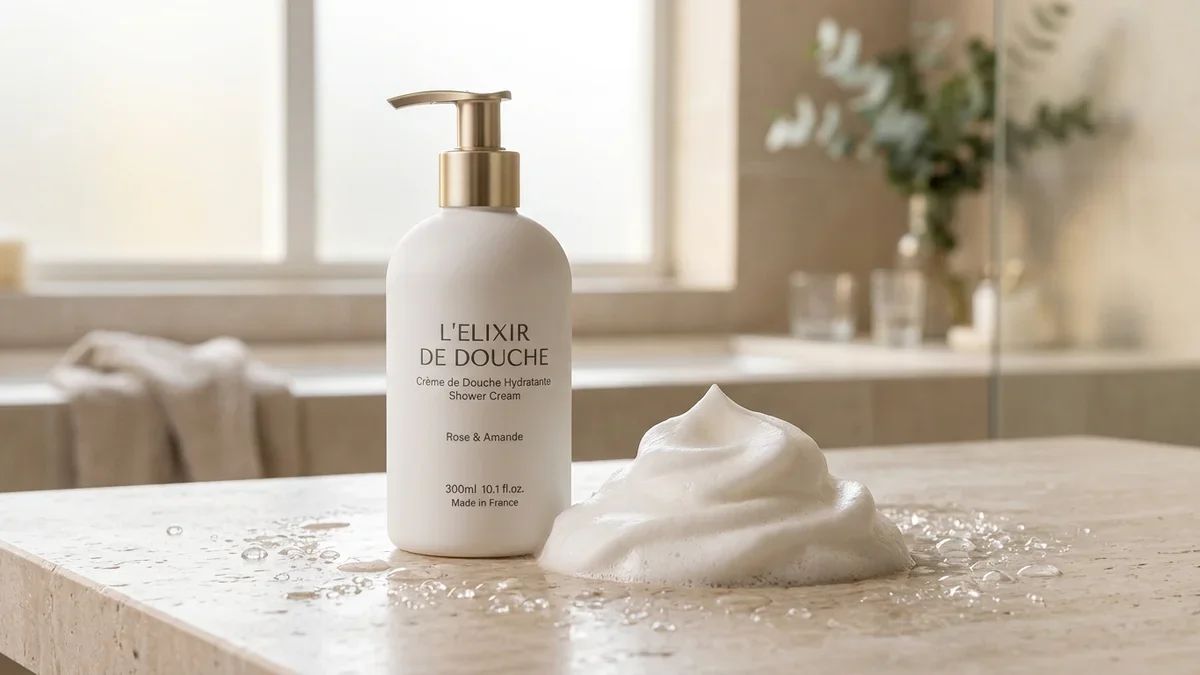
Shower Gel: Formulation Secrets and European Market Compliance Requirements
Shower gel is the most widely consumed liquid body hygiene product in the world. Whether formulating a conventional body wash, a certified organic sulfate-free cleanser, or a gentle family cleansing wash, its design relies on precise surfactant chemistry to remove excess sebum and impurities while preserving the skin's natural hydrolipidic film. However, marketing this rinse-off cosmetic in Europe requires full compliance with Regulation (EC) No 1223/2009. From formulation safety to CPNP notification, here is our complete guide.
💡 Launching a shower gel or liquid body cleanser? Ensure the regulatory compliance of your formulas. Estimate your costs in 2 minutes with our configurator.
The Chemistry of Shower Gels: Surfactant Selection and Viscosity
A shower gel is formulated primarily with water and a tailored blend of surfactants featuring a hydrophilic (water-attracting) polar head and a lipophilic (oil-attracting) hydrocarbon tail. The choice and concentration of surfactants determine the cleansing power and skin mildness of the formula:
- Primary anionic surfactants: such as sulfates (Sodium Laureth Sulfate - SLES) or gentle sulfate-free alternatives (Sodium Lauroyl Methyl Isethionate - SLMI, Sodium Cocoyl Glutamate). They provide rich lather and primary detergency.
- Amphoteric co-surfactants: such as Cocamidopropyl Betaine or Sodium Cocoamphoacetate. They reduce the irritation potential of anionic surfactants, stabilize foam, and build viscosity.
- Mild non-ionic surfactants: Coco Glucoside or Lauryl Glucoside, highly biodegradable ingredients that soften the overall surfactant system.
- Viscosity modifiers: to achieve the characteristic gel texture, formulators incorporate sodium chloride (salt), natural gums, or associative thickening polymers.
Regulatory validation of these formulations requires compiling a comprehensive cosmetic PIF. To understand the foundational framework applicable to body care products, consult our guide on the body care and hygiene PIF.
🔬 Insights from our Cosmetic Safety Assessor
"Shower gels typically contain over 80% water and are stored in warm, humid bathroom environments. Conducting a preservative efficacy test (challenge test) in accordance with ISO 11930 on the final finished formula is strictly mandatory to ensure microbiological preservation. Furthermore, during whole-body washing, the product inevitably runs off and may come into contact with sensitive mucous membranes (ocular and genital). In vitro eye irritation testing (HET-CAM or BCOP) alongside human skin patch testing provides critical toxicological evidence to include in the CPSR Part A."
Steps for Regulatory Compliance of Your Shower Gel
To legally market your shower gel in France, Switzerland, or across the European Union, you must complete the following stages:
- Stability and container-content compatibility testing: evaluating physical and chemical stability under accelerated conditions (40°C for 12 weeks) and verifying the integrity of the plastic bottle and dispensing closure.
- Preservative efficacy testing (Challenge test): confirming that the preservation system effectively neutralizes bacterial and fungal contamination under ISO 11930.
- Toxicological safety assessment (CPSR Parts A and B): calculating the Margin of Safety (MoS) for every ingredient, evaluating skin and mucous tolerance, and obtaining the formal safety assessor signature under Article 10 of Regulation (EC) No 1223/2009.
- Labeling compliance review: validating the mandatory INCI list, net volume, nominal weight, PAO (Period After Opening) or Minimum Durability Date (Best before end), precautions for use, and allergens declaration (above 0.01% for rinse-off products).
- CPNP notification: mandatory registration on the European Cosmetic Product Notification Portal prior to placing on the market.
Our regulatory team provides turnkey support for your cosmetic projects. Review our transparent service fees and scope in our dedicated PIF services guide.
⚠️ 3 Common Regulatory Pitfalls in Shower Gel Formulation
- Using restricted or banned preservatives: for instance, Methylisothiazolinone (MIT) is strictly banned in all cosmetic products in Europe (Annex V). Phenoxyethanol is restricted to a maximum concentration of 1.0%.
- Omitting fragrance allergen declarations: if the fragrance contains linalool, limonene, or other regulated allergens above 0.01% (the threshold for rinse-off cosmetics), they must appear explicitly in the INCI list.
- Medical claims for atopic or eczema-prone skin: claiming that a shower gel cures eczema, psoriasis, or dermatitis without approved clinical evidence turns the product into an illegal medicinal presentation. Keep messaging within cosmetic hygiene claims ("gently cleanses", "respects skin physiological pH").

Cross-Regulatory Links with Related Body Care Products
If you are developing a broader hygiene and body care line, explore our related technical guides:
- For complementary rinse-off lipid formulations, read our guide on shower oil regulation.
- For restorative post-wash hand treatments, explore our guide on hand cream regulation.
- For exfoliating body care, see our guide on hand scrub regulation.
Frequently Asked Questions About Shower Gel PIF
- Is container-content compatibility testing required for plastic bottles?
- Yes. Shower gels are typically packaged in plastic bottles (PET, rPET, or HDPE) fitted with disc-top caps or dispensing pumps. During accelerated stability testing (8 to 12 weeks at 40°C), the analytical laboratory verifies that the plastic does not warp, stress-crack, or leach undesirable compounds under the influence of surfactants, and that dispensing pump springs do not jam or corrode from the product's pH.
- Can I use phenoxyethanol as a preservative in an organic shower gel?
- Phenoxyethanol is a synthetic preservative permitted in conventional cosmetics up to a strict 1% maximum under EU regulation. However, it is entirely banned by organic certification standards such as COSMOS and Ecocert. For certified organic formulations, compliant preservative systems such as sodium benzoate and potassium sorbate (organic acid salts) must be used in conjunction with a slightly acidic pH (typically 4.8 to 5.2) to remain active.
- How should shower gel pH be measured and controlled for the PIF?
- The pH of a body wash should closely match the skin's natural acidic mantle (approximately 5.5). A formula with an excessively alkaline or overly acidic pH disrupts the cutaneous microflora and causes irritation. The formulation must be adjusted during compounding using citric acid or sodium hydroxide and measured with a calibrated laboratory pH meter for every manufacturing batch, with records logged in the PIF manufacturing records.

Configure Your Cosmetic PIF Project Live
Calculate your EU Cosmetic PIF & CPSR Price
Select your profile, galenic formula type, and laboratory test status to get an instant, transparent regulatory estimate.