Hand Scrub: Gentle Formulation Guide, Emollience, and EU Regulatory Compliance
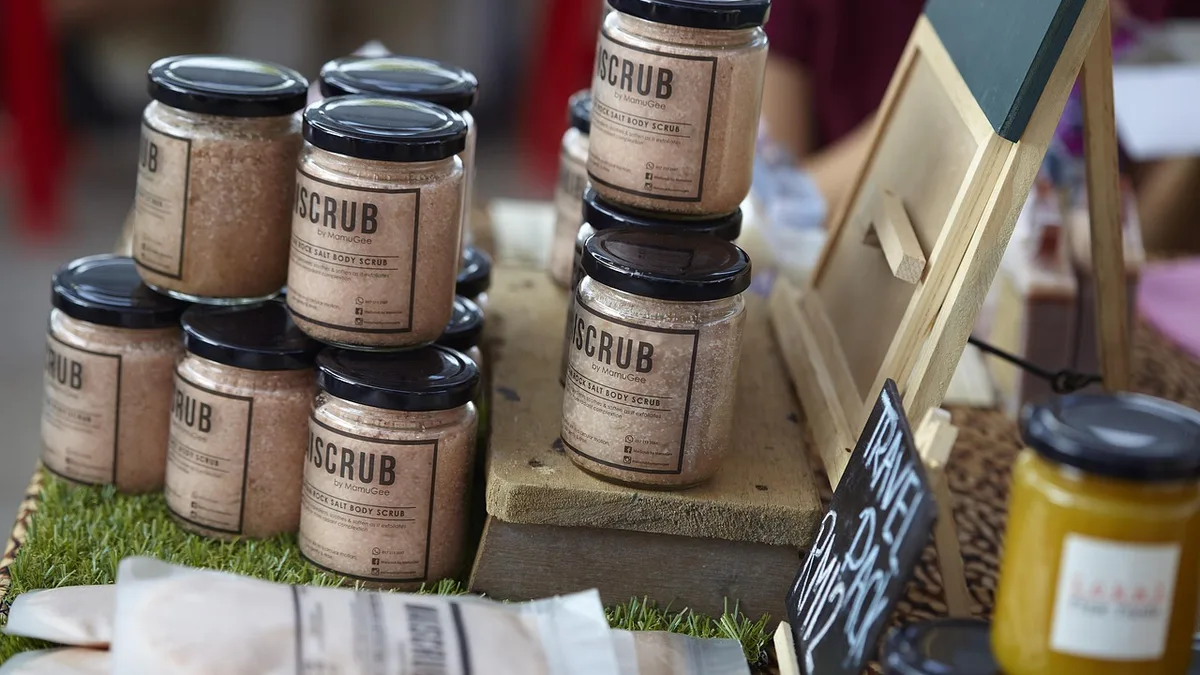
Hands are subjected to relentless daily aggressions: cold weather, household detergents, repeated washing, and physical friction: that induce cutaneous dryness and rough stratum corneum buildup. Hand scrubs are specialized treatments formulated to gently polish rough areas while delivering immediate lipid replenishment through botanical oils and butters. However, because the dorsal skin of the hand is thin and delicate, formulation must balance efficacy with tolerance to prevent contact dermatitis. Marketing hand scrubs in Europe requires compiling a Product Information File (PIF) compliant with Regulation (EC) No 1223/2009. Here is our complete guide.
💡 Formulating a hand scrub or gentle hand exfoliant? Ensure the regulatory compliance of your formulas. Estimate your costs in 2 minutes with our configurator.
Formulation Constraints for Gentle Hand Scrubs
Hand exfoliating formulas rely on physical abrasives whose safety profile is evaluated by our Cosmetic Safety Assessor during the Cosmetic Product Safety Report (CPSR):
- Choice of Exfoliating Grains: Sucrose (cane sugar) or hydrogenated jojoba wax beads (INCI: Hydrogenated Jojoba Oil). The skin on the back of the hand is delicate; excessively aggressive abrasives (like angular crushed nut shells) or coarse sea salt (which stings on micro-cracks) are avoided in favor of fine, rounded beads. Synthetic polymer microbeads (polyethylene) are strictly prohibited across Europe under Commission Regulation (EU) 2023/2055.
- Lipid-Replenishing Oil Phase: Sweet almond oil (INCI: Prunus Amygdalus Dulcis Oil), jojoba oil, or fractionated coconut oil. These lipids condition the epidermis during massage and guard against post-rinse barrier disruption.
- Natural Gelling Polymers: Xanthan gum or guar gum to formulate exfoliating creams or fluid cleansing gels.
The hand scrub PIF compiles this formulation, analytical purity, and safety data. For baseline requirements on body formulations, consult our guide on the body care & hygiene PIF and our central overview on the cosmetic PIF.
🔬 Insights from our Cosmetic Safety Assessor
"Hand scrubs are rinse-off cosmetics. However, they are designed to be massaged thoroughly into the skin for several minutes. Systemic exposure calculations (SED) must reflect this extended mechanical contact. In addition, because hands frequently suffer from micro-fissures and winter chapping, clinical patch testing under dermatological supervision is strongly advised to rule out primary irritation potential."
Regulatory Steps to Ensure Compliance for Hand Scrubs
To market your hand scrub legally in France or across the EU, execute the following steps:
- Thermal Stability and Packaging Compatibility: Accelerated thermal testing at 40°C over 8 to 12 weeks to confirm viscosity remains constant and abrasive grains do not separate from the lipid matrix.
- Microbiological Challenge Testing: Compulsory under ISO 11930 for all water-containing exfoliating gels and creams.
- Cosmetic Product Safety Report (CPSR): Toxicological assessment and formal sign-off by our qualified Safety Assessor under Article 10(2), with close review of fragrance and essential oil allergens.
- CPNP Registration: Mandatory notification of every finished cosmetic shade on the European Cosmetic Products Notification Portal prior to distribution.
Our team delivers complete regulatory compliance packages. Find out more about our packages and transparent pricing on our PIF services page.
⚠️ 3 Frequent Compliance Pitfalls in Hand Scrubs
- Using Sea Salt in Formulas for Damaged Hands: Salt triggers severe stinging sensations on cracked or irritated skin, substantially elevating irritation complaints during consumer use.
- Particle Sedimentation Under Thermal Stress: If exfoliating beads settle irreversibly at 40°C in an accelerated stability oven, the formula fails physical stability criteria for the PIF.
- Undeclared Fragrance Allergens: If the fragrance contains linalool or geraniol above 0.01% in a rinse-off product, they must be declared in the INCI list.
Regulatory Cross-Linking Across Product Categories
If your brand also formulates adjacent extremity care products, consult our associated guides:
- For restorative hand creams, explore our guide on hand cream regulation.
- For specialized foot treatments, visit our guide on foot cream regulation.
- For intensive foot exfoliation, review our guide on foot scrub regulation.
- For homemade DIY dry foot formulations, check our guide on dry feet scrub formulation & PIF.
Frequently Asked Questions on Hand Scrub Regulations
- Is container compatibility testing required for PP hand scrub jars?
- Yes. Hand scrubs are frequently packaged in wide-mouth polypropylene (PP) or PET jars. Accelerated stability testing (8 to 12 weeks at 40°C) verifies that the formula lipids do not stress-crack the container and that closure liners maintain an airtight seal against moisture evaporation.
- Can brown sugar be used as an abrasive in a natural hand scrub?
- Yes, absolutely. Brown cane sugar (INCI: Sucrose) is an ideal, gentle natural abrasive. If formulated in an anhydrous oil base (sugar blended with vegetable oils without water), it presents low microbiological susceptibility under ISO 29621 and is exempt from challenge testing, simplifying the regulatory testing process.
- How do you substantiate a "smoothing" claim for a hand scrub?
- The claim "smoothing" or "softens hands" is a sensory and aesthetic benefit. It does not require complex clinical trials: a documented consumer panel evaluation during product development provides adequate substantiation for Part B of the PIF.
Configure Your Cosmetic PIF Project Live
Calculate your EU Cosmetic PIF & CPSR Price
Select your profile, galenic formula type, and laboratory test status to get an instant, transparent regulatory estimate.