Foundation: Formulation Secrets, Pigments, and Regulatory Requirements
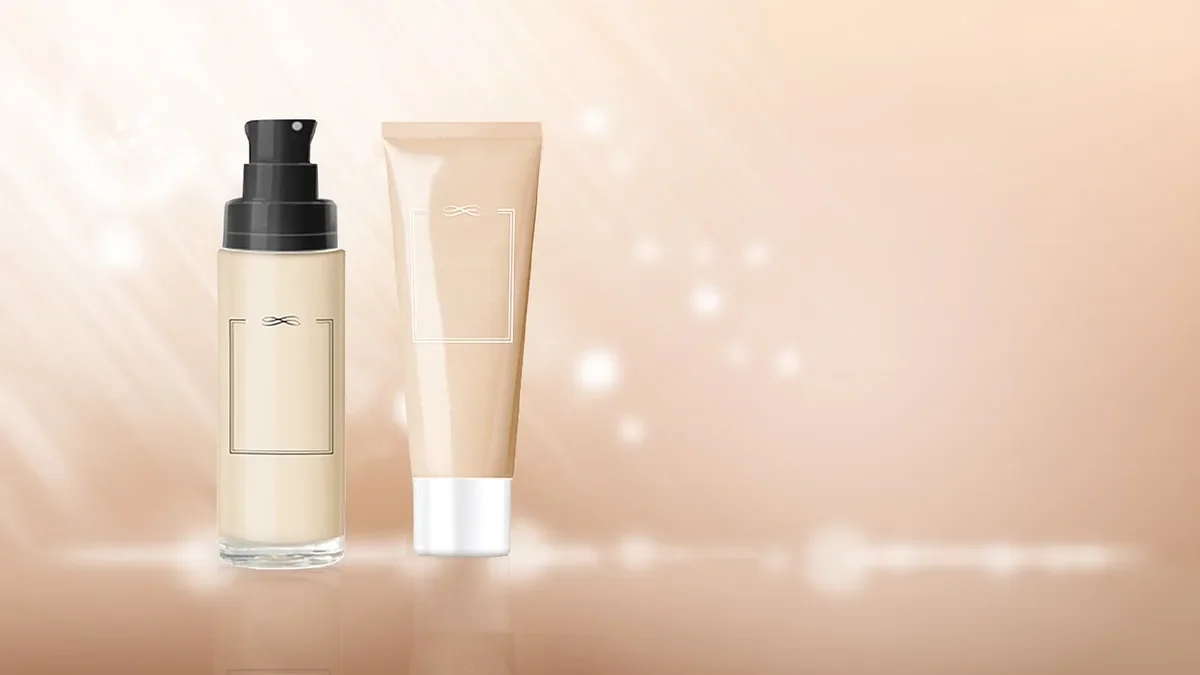
Foundation is the most widely applied face makeup product, manufactured as a fluid liquid emulsion, rich cream, or pressed powder compact. Designed to unify skin complexion, conceal blemishes, and deliver a radiant finish, its daily leave-on application across the entire face makes it one of the most demanding cosmetics to formulate and evaluate for toxicological safety. In Europe, commercialization requires strict adherence to Regulation (EC) No 1223/2009. From colorant purity control to toxicological risk assessment, discover our complete regulatory guide.
💡 Launching a line of foundations, tinted moisturizers, or BB creams? Ensure full regulatory compliance for your complexion formulas. Estimate your costs in 2 minutes with our configurator.
The Chemistry of Foundations: Fluid Emulsions, Pigments, and Powders
A conventional liquid foundation is an oil-in-water (O/W) or water-in-oil (W/O) stabilized emulsion supporting a dense suspension of micronized color pigments and texturizing powders:
- The color phase (pigments): titanium dioxide (CI 77891) for opacity and brightness, combined with iron oxides yellow (CI 77492), red (CI 77491), and black (CI 77499) to achieve exact skin undertones. These mineral colorants must comply with strict Annex IV purity criteria and SCCS limits regarding trace heavy metals (lead, arsenic, mercury, cadmium).
- The lipid phase (glide and sensory feel): botanical oils (jojoba, squalane), light esters, or volatile silicones (cyclopentasiloxane, dimethicone) to ensure smooth blendability, weightless spreading, and a non-greasy finish.
- Texturizing and suspending agents: natural gums, bentonite clays, or treated silicas that stabilize the pigment dispersion and prevent sedimentation or phase separation.
The PIF compiles all technical specifications, colorant purity assays, and stability assessments. To understand the overarching European regulatory requirements for color cosmetics, consult our guide on makeup cosmetic regulation and our foundational reference on the cosmetic PIF.
🔬 Insights from our Cosmetic Safety Assessor
"Because foundation is applied repeatedly on extensive facial surface areas (approximately 1.5 to 2.0 grams per day as a leave-on cosmetic), Systemic Exposure Dosage (SED) values are substantial. The Safety Assessor performs rigorous Margin of Safety (MoS) calculations for every raw material. Preservatives (phenoxyethanol, organic acids) and fragrance allergens are scrutinized to minimize contact sensitization risks. Moreover, microbiological challenge testing according to ISO 11930 is strictly mandatory for all liquid aqueous formulas."
Steps for Regulatory Compliance of Your Foundation Line
To market your foundation legally in France, Switzerland, and across the EU, you must complete the following stages:
- Stability and container-content compatibility testing: accelerated stability testing at 40°C for 8 to 12 weeks to confirm that the emulsion does not split, that pigments remain in suspension, and that airless pump packaging maintains dispensing reliability.
- Microbiological challenge testing: mandatory under ISO 11930 to confirm that the preservative system protects against microbial contamination during daily consumer use.
- Cosmetic Product Safety Report (CPSR): drafting and formal sign-off of Parts A and B by our qualified Safety Assessor. Allergen content, heavy metal purity certificates, and ocular/dermal tolerance test results undergo comprehensive evaluation.
- CPNP notification: mandatory product registration on the European notification portal prior to commercial distribution.
Our team provides turnkey regulatory guidance tailored to your product range. Discover our service details in our dedicated PIF services guide.
⚠️ 3 Frequent Regulatory Risks in Foundations
- Omitting fragrance allergen declaration: if the formulation fragrance contains linalool, limonene, or other regulated allergens at concentrations exceeding 0.001% (the strict threshold for leave-on cosmetics), they must appear explicitly in the INCI list.
- Thermal emulsion instability: if the emulsion sweats, thins, or exhibits visible pigment pooling during 40°C oven stability testing, the formula is deemed non-compliant for PIF validation.
- Undeclared SPF sun protection claims: displaying a sun protection factor (SPF 15 or 20) without substantiating clinical in vivo data (ISO 24444) and full Annex VI UV-filter compliance documentation will trigger regulatory penalties.
Cross-Regulatory Links with Related Makeup Products
If you are expanding your cosmetic line with complementary complexion or facial products, review our related technical guides:
- For luminous liquid and powder illuminators, see our guide on highlighter makeup PIF.
- For comprehensive face and complexion routines, consult our guide on complexion makeup regulation.
- For shaving and prep cosmetics, read our guide on shaving foam regulation.
Frequently Asked Questions About Foundation PIF
- Is container-content compatibility testing required for liquid foundation pump bottles?
- Yes. Liquid foundations are packaged in glass or plastic bottles equipped with precision dispensing pumps. Accelerated stability testing (8 to 12 weeks at 40°C) confirms that the packaging materials do not absorb lipids from the formula, that pigment particles do not clog internal pump valves, and that no chemical leaching occurs.
- Can I formulate a certified organic foundation without silicones?
- Yes. Silicones (such as cyclopentasiloxane or dimethicone) are prohibited under organic standards like COSMOS and Ecocert. Formulators substitute them with plant-derived volatile esters (such as Dicaprylyl Ether, Coco-Caprylate/Caprate) and light botanical dry oils (jojoba, squalane) to deliver a silky glide and powdery dry-down without occlusive effects.
- What is the regulatory difference between a BB cream and a foundation?
- Under European Regulation (EC) No 1223/2009, there is no technical regulatory difference: both products are categorized as leave-on facial cosmetics applied over large body surface areas. The distinction is purely marketing (a BB cream highlights dual benefits of moisturization and tinted coverage). Regulatory requirements for the PIF, CPSR, and testing remain identical.
Configure Your Cosmetic PIF Project Live
Calculate your EU Cosmetic PIF & CPSR Price
Select your profile, galenic formula type, and laboratory test status to get an instant, transparent regulatory estimate.