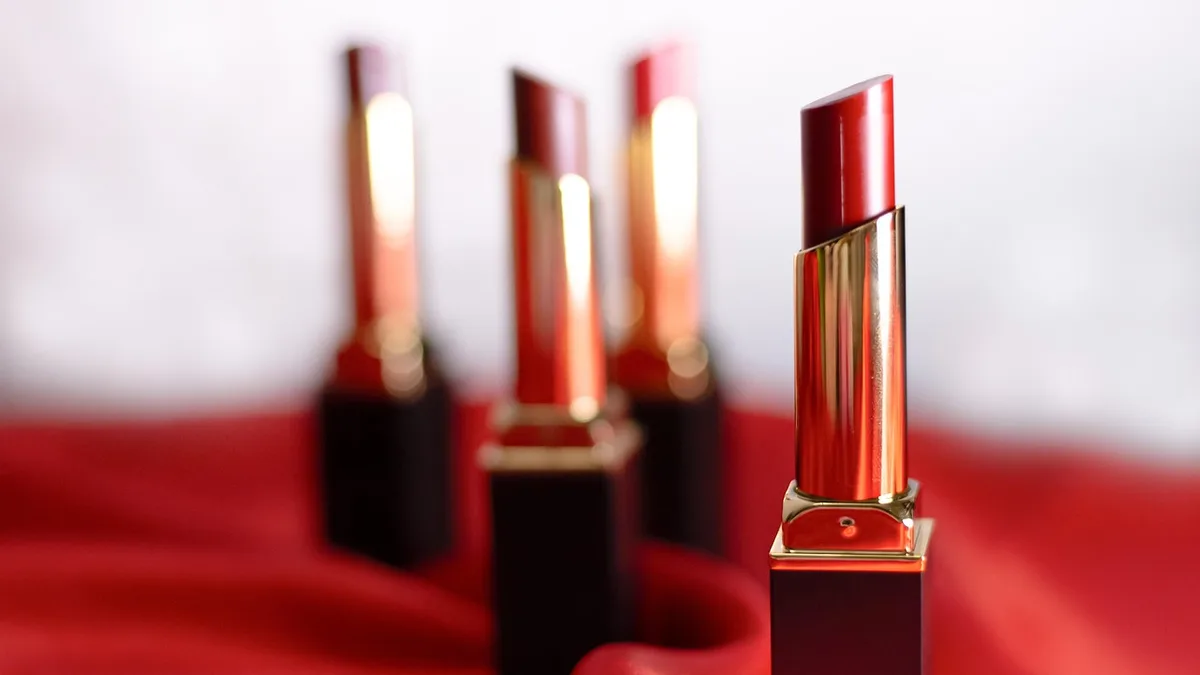
Lipstick Formulation: Waxes, Heavy Metals in Pigments & European Regulatory PIF Guide
Lipstick stands as the most iconic cosmetic makeup product, spanning matte, satin, sheer, and high-gloss textures. Formulated primarily with structured waxes, nourishing botanical oils, and high concentrations of color pigments, lip products are applied directly to the thin, delicate vermilion border of the lips. Because application on the oral mucosa leads to repeated involuntary ingestion throughout the day, marketing a lipstick in Europe requires strict compliance with the toxicological safety mandates of Regulation (EC) No 1223/2009. From pigment purity audits to CPSR signature, here is your essential compliance guide.
💡 Launching a lipstick line, tinted balm, or pigmented lip cosmetic? Ensure total regulatory compliance for your shade catalog. Estimate your compliance fees in 2 minutes with our configurator.
Anatomy of a Lipstick: Waxes, Oils and Strict Pigment Restrictions
Engineering a high-performance lipstick requires striking the ideal balance between rich color payoff, smooth glide, mechanical hardness, and long wear without drying lips:
- The structural wax matrix: Carnauba wax (INCI: Copernicia Cerifera Cera), candelilla wax, or beeswax. These high-melting-point waxes provide stick rigidity, prevent thermal slump, and determine mold release.
- The oil and emollient phase: Pharmaceutical-grade castor seed oil (INCI: Ricinus Communis Seed Oil) for pigment wetting and brilliant shine, blended with natural esters and plant oils for barrier replenishment.
- Colorants, lakes, and pearlescent pigments: Titanium dioxide (CI 77891), iron oxides (CI 77491, CI 77492, CI 77499), and organic lakes (such as D&C Red No. 7 CI 15850 or Allura Red CI 16035). All colorants must be explicitly listed in Annex IV of Regulation (EC) No 1223/2009 and adhere to strict purity criteria regarding residual heavy metal impurities.
Your PIF compiles all formulation data, pigment purity certificates, and stability results. For an overview of makeup standards, explore our guide on makeup cosmetic PIF and our cornerstone guide on the cosmetic PIF.
🔬 Insights from our Cosmetic Safety Assessor
"Because lip cosmetics are applied to the mouth, systemic oral ingestion must be rigorously accounted for in the CPSR. The SCCS (Scientific Committee on Consumer Safety) establishes an average daily oral lipstick ingestion of 57 milligrams. This mandatory ingestion endpoint rules out unpurified mineral oils containing Mineral Oil Saturated Hydrocarbons (MOSH) and Mineral Oil Aromatic Hydrocarbons (MOAH) due to tissue accumulation risks. Furthermore, heavy metal limits in color additives (lead, cadmium, arsenic, mercury) are subjected to strict toxicological scrutiny."
Mandatory Compliance Steps to Legally Commercialize Your Lipstick Line
To market lipsticks legally in France, the European Union, and the UK, you must complete the following regulatory steps:
- Accelerated Thermal Stability and Swivel Mechanism Compatibility Testing: 8 to 12 weeks of accelerated aging at 40°C to verify that the lipstick bullet does not soften, warp, sweat oils (syneresis), or separate from the rotating mechanism.
- Cosmetic Product Safety Report (CPSR): Toxicological risk modeling and formal Part B signature by our qualified safety assessor, including strict oral ingestion calculations and allergen audits.
- European CPNP Notification: Compulsory electronic notification of each commercial shade on the portal prior to sales distribution.
Our specialists provide turnkey regulatory solutions for multi-shade collections. Review our packages in our PIF services guide.
⚠️ 3 Critical Regulatory Risks in Lip Cosmetics
- Heavy metal contamination in low-cost pigments: Sourcing non-cosmetic industrial lakes containing trace lead, arsenic, or antimony above statutory purity thresholds invalidates the CPSR.
- Exceeding fragrance allergen thresholds: Fragrance allergens (such as geraniol, linalool, or benzyl benzoate) in leave-on lip cosmetics must be declared on the label when exceeding 0.001% (10 ppm).
- Thermal deformation at 40°C: A lipstick bullet with an inadequate wax melting point will melt, bend, or smear inside its casing during summer transport, resulting in an unfavorable stability evaluation in the PIF.

Semantic Regulatory Architecture Across Your Color Cosmetics Portfolio
If you develop complementary makeup formulations, explore our linked regulatory guides:
- For comprehensive lip makeup standards, read our guide on lip makeup regulation.
- For powder and cream cheek products, check our guide on blush powder regulation.
- For complexion and base cosmetics, consult our guide on liquid foundation PIF.
Frequently Asked Questions About Lipstick Regulation
- Is container compatibility testing required for lipstick swivel mechanisms?
- Yes. Solid lipsticks are packaged in mechanical tubes combining plastic components and metal sleeves. During the accelerated stability study (8 to 12 weeks at 40°C), testing laboratories confirm that formulation fatty acids and molten waxes do not interact with internal plastics, cause mechanism jamming, or lead to bullet detachment from the base cup.
- Is titanium dioxide (CI 77891) permitted in European lipsticks?
- Titanium dioxide (CI 77891) is an authorized cosmetic colorant listed in Annex IV of Regulation (EC) No 1223/2009, widely used to impart opacity and pastel tones. For lip cosmetics where oral ingestion is expected, the safety assessor verifies batch purity certificates to confirm that heavy metal impurities and particle size specifications comply fully with European cosmetic standards.
- How do you substantiate a "24-hour long wear" claim on lipstick?
- Claims of extended wear ("12-hour wear", "transfer-proof", "long-lasting") must be substantiated by standardized in vivo clinical evaluations or instrumental colorimetry measuring chroma retention across specified intervals (t0, t4h, t8h, t12h) on volunteer panels under controlled conditions.
Configure Your Cosmetic PIF Project Live
Calculate your EU Cosmetic PIF & CPSR Price
Select your profile, galenic formula type, and laboratory test status to get an instant, transparent regulatory estimate.